22/10/2026 08:20
Doorstop or Door Closer? YouTube Title Translations for Cambodian Hardware Shops
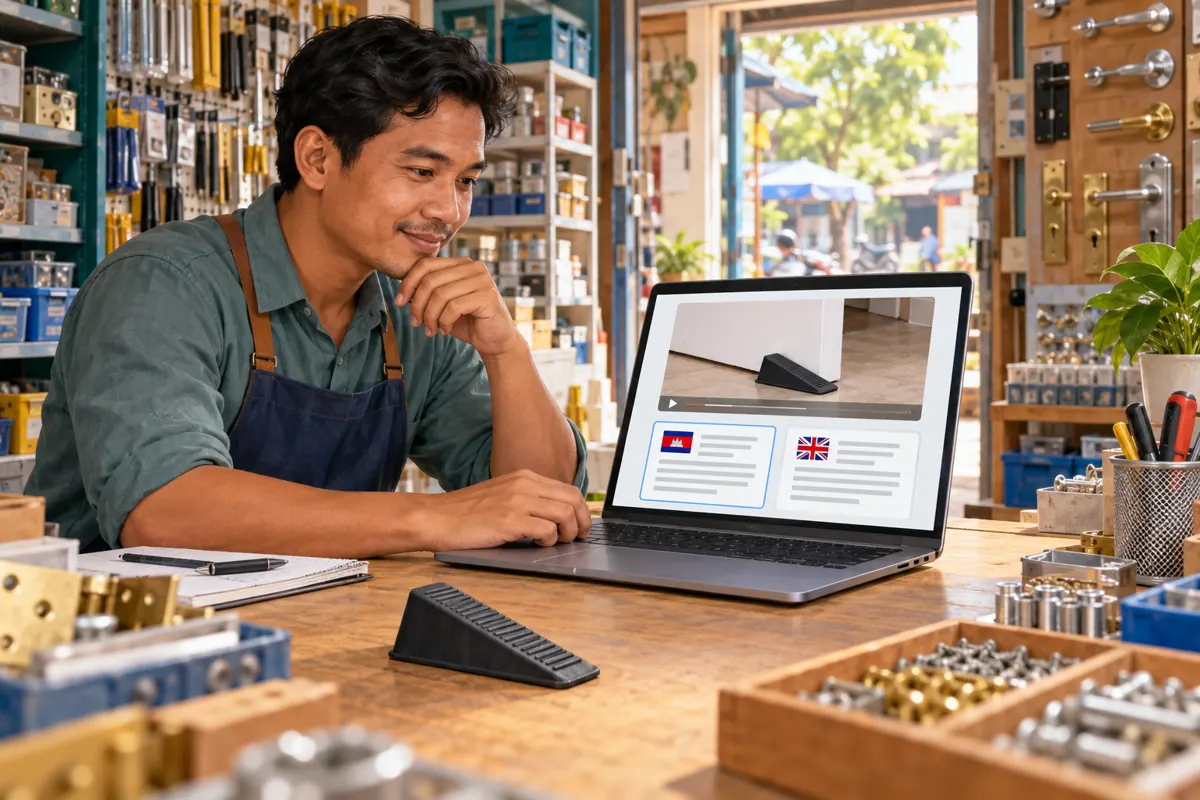
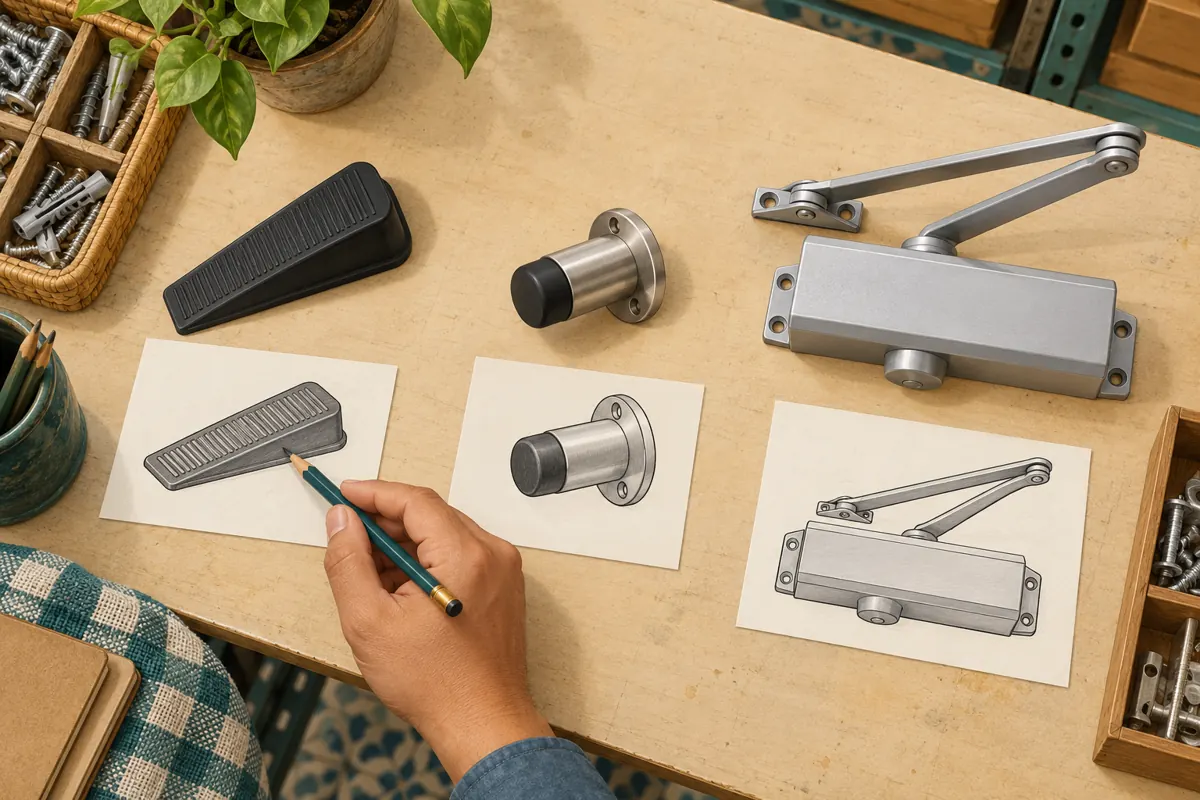
A useful product demonstration can attract the wrong enquiry when its translated title names a different item. A rubber wedge that holds a door open, a bumper that cushions contact with a wall, and a mechanism that closes a door serve different purposes. For a Cambodian hardware shop promoting videos to Khmer-speaking and English-speaking customers, those distinctions should survive every language version. This guide explains how to prepare and add translated YouTube titles and descriptions, check them against the actual demonstration, and decide whether a proposed social media service belongs in the promotion plan. The goal is a visitor who understands the product and knows what to ask next.
1. Begin with one product question
Choose a video that answers a narrow buying question before translating anything. For a doorstop demonstration, that might be: what should a buyer check beneath the door before asking about this wedge? Keep the task tied to the item shown. A broad title about improving home security would create expectations that an ordinary wedge demonstration does not establish.
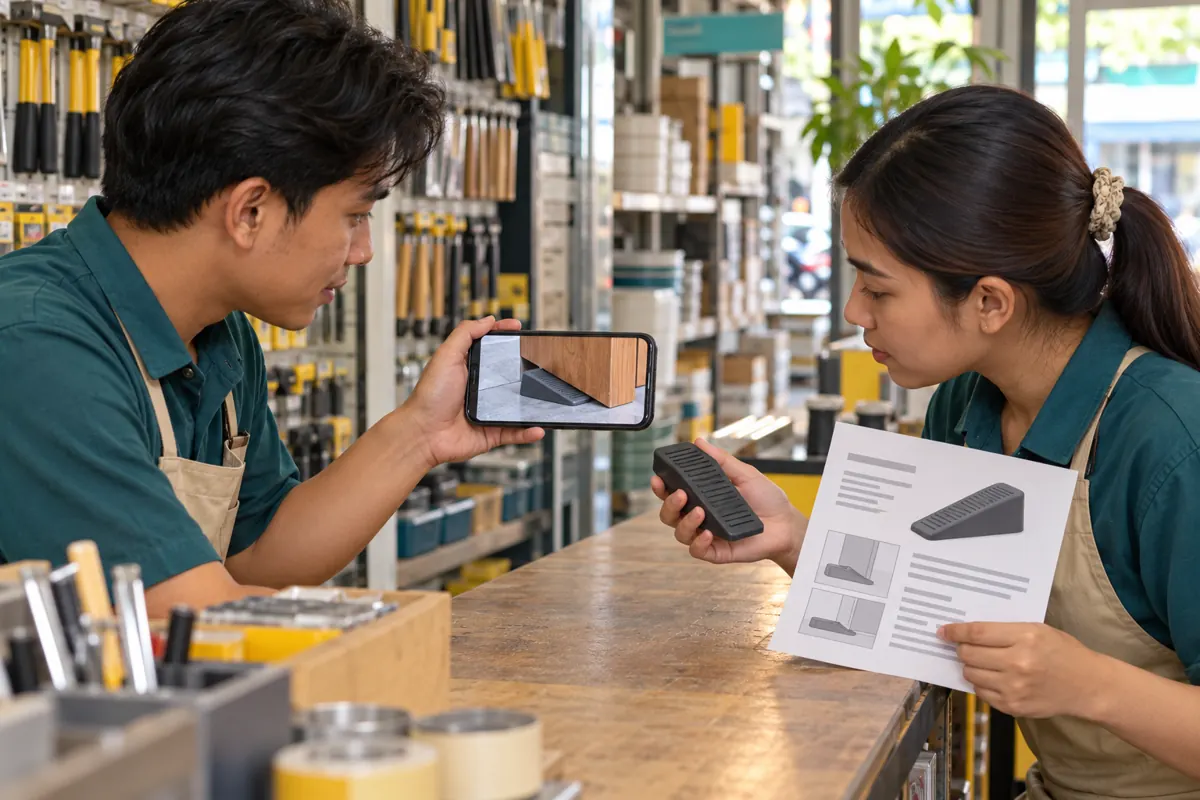
Consider a hypothetical Phnom Penh hardware shop whose employee records a Khmer explanation of a rubber wedge. The shop also receives English enquiries from local property managers. Its translation task is to help both groups identify the same product, understand the same demonstration, and provide the same useful information when contacting the shop. It is not a reason to imply nationwide delivery, universal compatibility, or an installation service the shop has not confirmed.
2. Separate the title, spoken explanation and captions
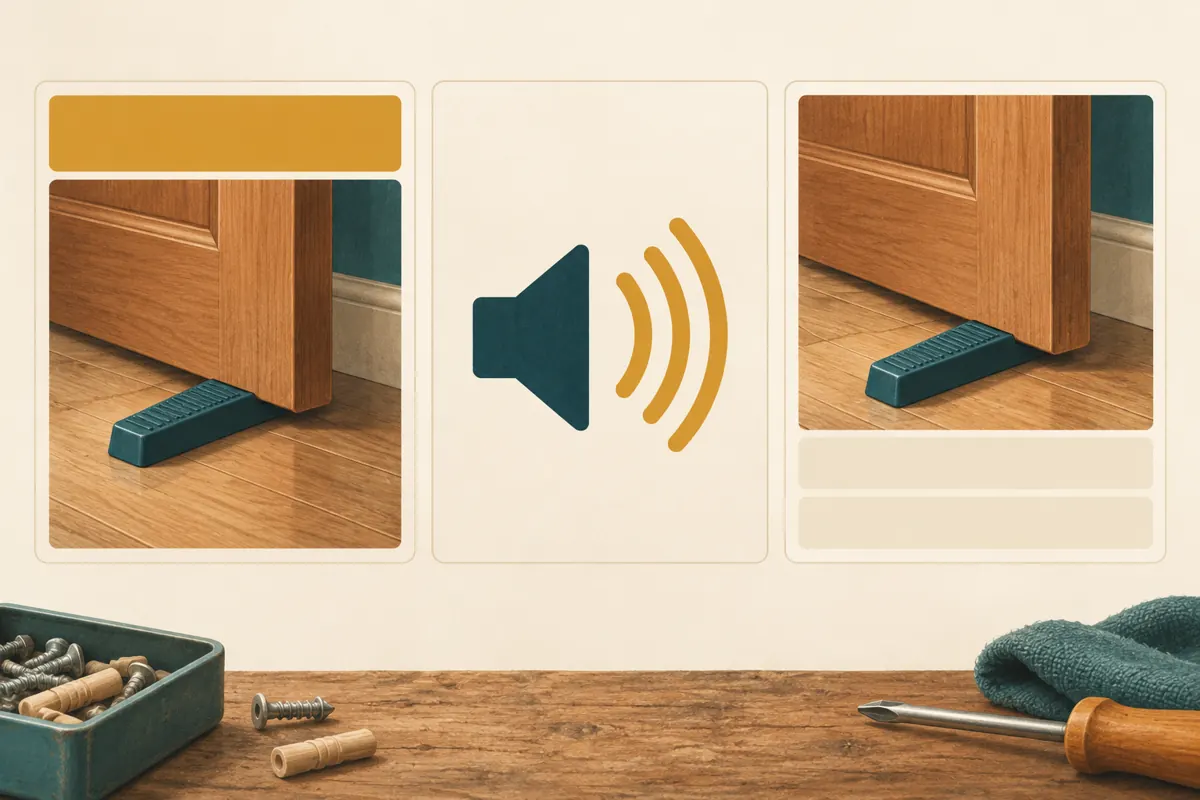
Treat the title and description as the information surrounding the video. The spoken explanation is another layer, and captions are another. An English title should not be presented as proof that the entire demonstration is understandable in English. Where the voice remains Khmer, say so naturally in the description and explain whether reviewed English subtitles are available.
YouTube provides separate tools for translated titles and descriptions and for subtitles. Its official translation guidance is at https://support.google.com/youtube/answer/6289575?hl=en. Decide which layer actually needs work: someone unable to identify the item needs clearer naming; someone unable to follow the spoken measuring instruction needs language support within the video. Solving the first problem alone does not solve the second.
3. Create a product meaning sheet
Before drafting, place the real item beside the video and write a short internal fact sheet. Include its stock code, product type, intended function, visible material, package contents, and any limitations the shop can substantiate. Record which facts come from the supplier and which are merely visible in this demonstration. Do not convert a successful demonstration on one door into a statement that the item fits every door.
Add terms that must not be substituted. In the hypothetical shop, the reviewer marks door closer and door lock as incorrect names for the wedge. A wall bumper is also a separate item even if customers use a broad everyday term for both. Ask a Khmer-speaking product specialist to approve the local terminology. When a direct equivalent sounds ambiguous, a brief description of the function can carry more meaning than a polished but inaccurate label.
4. Draft titles around the demonstrated action
Write the source title first, then translate its meaning. A hypothetical English version could be: Rubber Door Wedge: Check the Gap Before Choosing. That wording identifies the item and the practical question without promising that it will work everywhere. Use a different title if the footage only shows unpacking or a product close-up; the title should not announce a measuring lesson that never appears.
Give the translator the video and fact sheet together. Ask them to preserve the product, action, and limitation while using natural wording in the target language. Avoid packing both languages, several spelling variants, and unrelated location terms into one title. The review question is simple: would someone reading either version expect the same demonstration? If one version promises installation and the other only introduces the product, revise before saving.
5. Translate the description as a customer instruction
Start with what the viewer will learn, then give the next useful action. For the hypothetical shop, an English description might explain that the video demonstrates one wedge on the shop’s sample door and ask buyers to send a photo of the door’s lower edge plus a measurement of the clearance. Specify the unit you want customers to use. Keep requests focused on the product rather than collecting unnecessary personal details.
Review the operational sentences independently from the product wording. A translation must not turn ask about collection into collection available today, or contact us about delivery into delivery included. Keep confirmed opening information, contact routes, and stock qualifications aligned across versions. If the shop cannot reliably maintain translated prices and availability statements, use a clear enquiry instruction instead of leaving a temporary offer embedded in an otherwise evergreen guide.
6. Check the original language before adding translations
YouTube says the video language setting helps identify the original language and supports captions and language discovery. For an incorrectly configured upload, its documented route is YouTube Studio, Content, the video, then Show more. Under Language and captions certification, review the relevant language choices and save. The official instructions are at https://support.google.com/youtube/answer/6304325?hl=en.
Base this decision on the actual upload. A Khmer explanation does not become an English-language recording because the product packaging uses English. For a mixed-language demonstration, have the editor listen to the complete explanation before choosing the appropriate setting. Record what was selected so a later colleague does not change it merely to match a campaign brief. YouTube also notes that changing the original-language setting affects the source for future subtitle translations, while existing published and draft captions remain unaffected.
7. Add the approved title and description in Studio
In YouTube Studio, open Subtitles and select the existing video. If prompted, confirm its language. Choose Add language and select the target language. In the Title and description area, choose Add, enter the reviewed text, and publish that translation. These are the steps documented in YouTube’s translated-title instructions. Adding this text to the existing video avoids creating another upload simply to give it another language version.
Before publishing, compare the text in the fields with the approved draft. Check the product code character by character, then read the enquiry instruction aloud. Reopen the saved language entry to confirm that the intended version is present. Keep the public video URL in the review note alongside the languages checked and the reviewer’s name. This is an editorial record; it does not require sharing account passwords or granting a translator unnecessary channel access.
8. Test understanding with a real viewing task
Ask a colleague who understands the target language to review the title, description, and video on a phone. Give them a task rather than asking whether the translation looks good: identify the item, explain what the demonstration proves, and say what information they would send before buying. A fluent sentence can still fail this test if it leaves the reader expecting a different product.
In the hypothetical review, the colleague thinks the wedge automatically slows a closing door. That answer exposes a meaning problem even if every sentence is grammatically correct. Return to the title and description, identify the wording responsible, and correct it. Also distinguish the saved translation from what appears in a particular viewing session. Do not treat one screen as proof of what every viewer will see, and do not promise a particular search position after translation.
9. Put an SMM service through a separate decision
A translated video may be clearer, but that does not establish that a panel service is suitable. One exact catalogue title in the supplied jak-follow.com brief is “YouTube Like ~ Max 100k ~ 50k/days ~ Instant ~ 𝐍𝐎 𝗥𝗘𝗙𝗜𝗟𝗟”. The title identifies a likes-related listing. Its description is empty, so the brief does not establish its delivery method, audience, or suitability. Treat the speed and quantity wording as catalogue claims, not verified performance.
YouTube prohibits artificial increases in engagement metrics and warns that a hired promoter’s methods can affect the channel. Its policy is at https://support.google.com/youtube/answer/3399767?hl=en. Do not order artificial engagement to make a translation appear successful. If a provider cannot explain a compliant method, leave that service out of the plan. Purchased engagement is not evidence of Cambodian viewers, genuine interest, sales, or advertising delivery, and a panel listing does not establish an official YouTube affiliation.
10. Promote the guide and review the right questions
Once the language review passes, share the existing video through relevant channels the shop already uses. Write the accompanying message around the practical problem: checking the gap before enquiring about a wedge. Avoid implying that the video is a comprehensive guide to every door accessory. Staff answering messages should have the same product fact sheet so the private reply does not contradict the public explanation.
Keep a brief record of genuine enquiries without treating them as a controlled experiment. Note whether people identify the right item, provide the requested measurement, or still confuse the wedge with another accessory. These observations can guide the next edit, but they do not establish that translation caused a sale. Review all language versions when the product, package contents, or collection instructions change. Updating only the most visible version leaves another audience with an outdated promise.
Frequently asked questions
Should a Cambodian shop add English if most customers use Khmer?
Add it when it serves an identifiable audience and the shop can maintain the wording accurately. In the hypothetical example, existing English enquiries provide a practical reason. There is no need to create many language versions without someone able to review them. Keep the Khmer information useful and current rather than reducing it to make room for an unmaintained translation.
Does translating the title also translate the voice or captions?
No. Adding translated title and description text is a separate task from preparing subtitles or translated audio. Tell viewers what language support actually exists. If understanding the spoken instruction is necessary to use the demonstration, review that need before promoting the video to people who cannot follow the original explanation.
Can machine translation prepare the first draft?
It can provide a draft, but a product-aware reviewer should approve the result. Give the reviewer the footage and meaning sheet, not just isolated sentences. Pay particular attention to accessory names, measurements, included parts, and words that change an enquiry into a promise. A fluent draft is not evidence that those details survived correctly.
What if a reviewer cannot see the translated title?
First reopen the video’s language entry in Studio and check that the intended text was published. Record what the reviewer actually saw rather than repeatedly rewriting an approved translation. The saved language entry and a particular viewer’s display are different checks. Use the official help instructions to investigate without assuming that all viewers receive the same presentation.
Should the shop buy likes to test the translated version?
No. Likes do not test whether a person understood the product name, and artificial engagement conflicts with YouTube’s policy. A direct comprehension review is more useful: ask someone to identify the item, state the demonstrated limitation, and describe the next enquiry step. Later customer questions can inform improvements without being presented as proof of translation-driven sales.
Explore the current service catalogue, create an account, or ask a specific question through support tickets.
- YouTube Help: Translate your own video titles & descriptions
- YouTube Help: Change the language of your uploaded video
- YouTube Help: Fake engagement policy
Prepared with AI assistance. Illustrations explain the workflow and do not represent customer results.