
21/10/2026 16:18
Chairs, Fans or Both? Telegram Multiple-Answer Polls for Cambodian Event-Rental Shops

A customer organising a small event may need chairs, fans and a speaker together. Asking that customer to choose only one item can hide the combination they actually want to understand. For Cambodian event-rental shops, a Telegram poll that accepts several selections can help identify which equipment deserves a clearer demonstration. Its value comes from the question and the follow-up, not from making the response total look impressive. This workflow explains how to collect useful preferences, turn them into practical promotional content and handle enquiries without treating votes as reservations. It also explains where SMM-panel services fit into the decision—and why purchased engagement cannot establish local rental demand.
1. Decide which business decision the poll will support
Start with a decision you can act on without making an expensive commitment. Choosing the next equipment demonstration is a good example. Buying additional inventory based only on poll selections is much harder to justify. Write the intended decision in your working notes before drafting the question: choose which product explanations to prepare for customers planning small events.
In a hypothetical Phnom Penh rental shop, customers repeatedly ask whether chairs fold for transport and whether fans come with stands. The owner wants to prepare useful Telegram posts before the next busy period. A poll can help prioritise those explanations. It cannot establish event dates, delivery locations, required quantities or willingness to accept a quotation. Those details belong in a separate enquiry.
2. Use multiple answers when needs can overlap
Telegram’s official poll guide describes a multiple-answer option that lets participants select more than one response. It also explains creating polls in groups or channels through the attachment menu. The current technical documentation continues to identify multiple selection as a supported poll setting. This makes the format suitable for equipment categories that customers may need together.
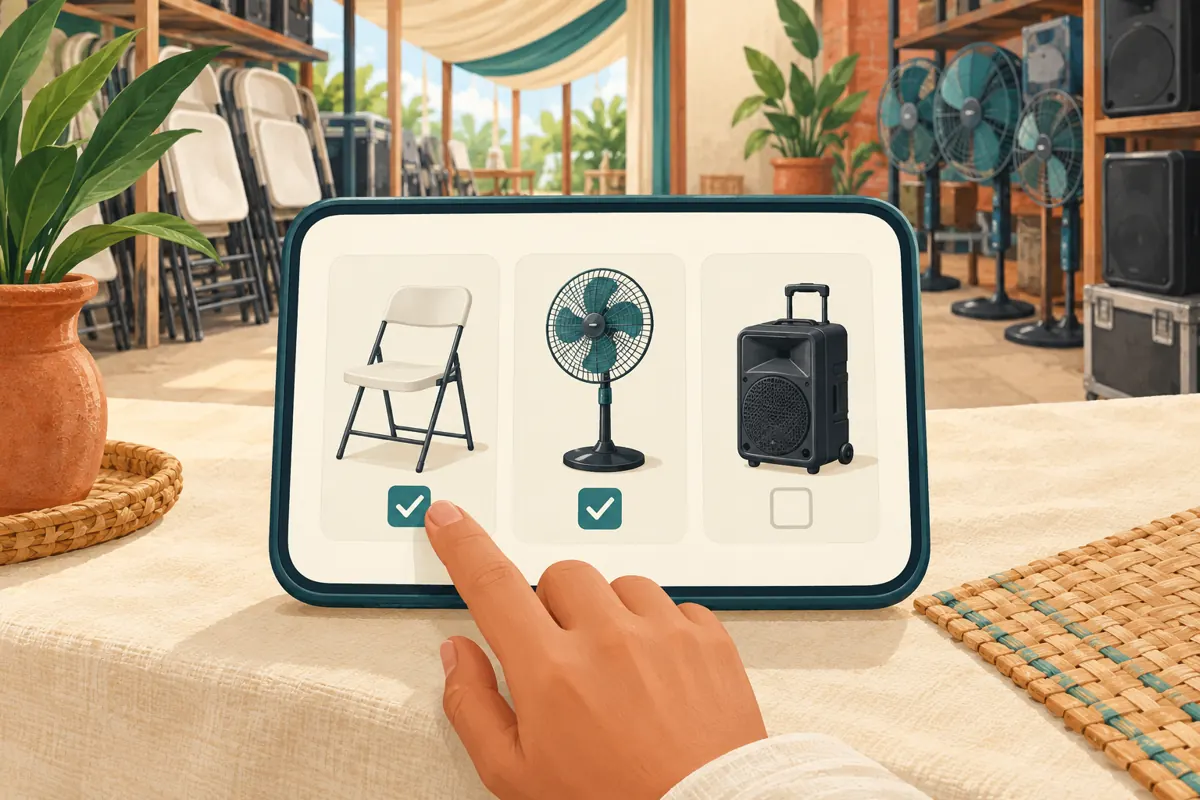
Use a regular poll with multiple answers enabled for this exercise. A suitable hypothetical question is: Which equipment would you like us to explain for a small event? Select every relevant item. If your actual decision is which single demonstration to publish first, ask that separately using one choice. Combining a preference-ranking question with an equipment-needs question makes the responses harder to interpret.
3. Write options at the same level of detail
Keep the options comparable: folding chairs, pedestal fans, folding tables and portable speakers. Avoid mixing a product with an entire package, such as chairs alongside complete wedding setup. Someone choosing the package might also select every individual item inside it. You would then struggle to understand whether the responses describe separate interests or the same need expressed repeatedly.
Use terms your customers recognise. A Cambodian shop can prepare its actual customer-facing poll in Khmer, with familiar model names where needed, while keeping internal notes in the team’s preferred language. Have a colleague check that each option names equipment rather than implying availability. Put delivery, setup and collection questions in a later discussion; they describe service requirements rather than equipment categories.
4. Explain the purpose before inviting selections
Publish a short introduction beside the poll explaining what will happen next. For example: We are preparing equipment explanations for small events. Select the items you would like to understand better. This poll does not reserve stock; message the shop separately for availability. That wording gives participants a reason to respond and prevents a selection from sounding like an order.
Define the intended audience without pretending the poll verifies it. A shop serving a particular delivery area can say that the question is intended for people planning events there. Readers outside that area may still encounter the content. Do not later describe every response as coming from a local customer merely because the invitation mentioned Phnom Penh or another Cambodian location.
5. Test the settings and reading experience
Before posting publicly, make a practice poll in an internal group where you can check the wording and available settings. Confirm that more than one equipment option can actually be selected. Read the introduction and question on a phone, looking for product names that wrap awkwardly or options that sound too similar. Use the interface available in your installed app rather than relying on remembered button positions.
Review the vote-visibility setting as well. Telegram documents anonymous polling and visible votes; its technical reference distinguishes whether voters are publicly visible. For general content planning, anonymous responses may be sufficient. Tell participants what to expect, and avoid soliciting event addresses, phone numbers or payment details in the poll. A public preference exercise needs very little personal information.
6. Invite relevant participation without manufacturing demand
Share the poll where people already seek equipment information from your shop. Explain why their selections will improve the next demonstration. Staff can mention it during relevant conversations, but participation should remain optional. Avoid repeatedly pushing it into unrelated groups or asking employees to select products merely to make the poll look active.
Set a review date in the accompanying message so the team knows when to decide on the next post. Choose a period that includes the shop’s normal customer-contact cycle. If participation remains limited, record that limitation and consult genuine enquiry notes. A small, relevant set of responses can suggest a useful explanation, but it does not become a representative market survey simply because the shop wants a clear answer.
7. Read selections as overlapping interests
Multiple-answer results require different arithmetic from a single-choice poll. One participant may select chairs and fans, so adding the selections across options can exceed the number of participants. In a hypothetical example, someone planning a family gathering selects three categories. That is one participant expressing three interests, not three potential customers and certainly not three bookings.
Record the question, review time, participant total and selections for each option as separate fields. Do not add option totals and label the result people interested. Aggregate selections also do not prove that particular items were chosen together by the same respondents. If chairs and fans both attract attention, a combined demonstration might be worth trying, but describe that as an editorial decision rather than a proven package preference.
8. Turn the responses into a concrete demonstration
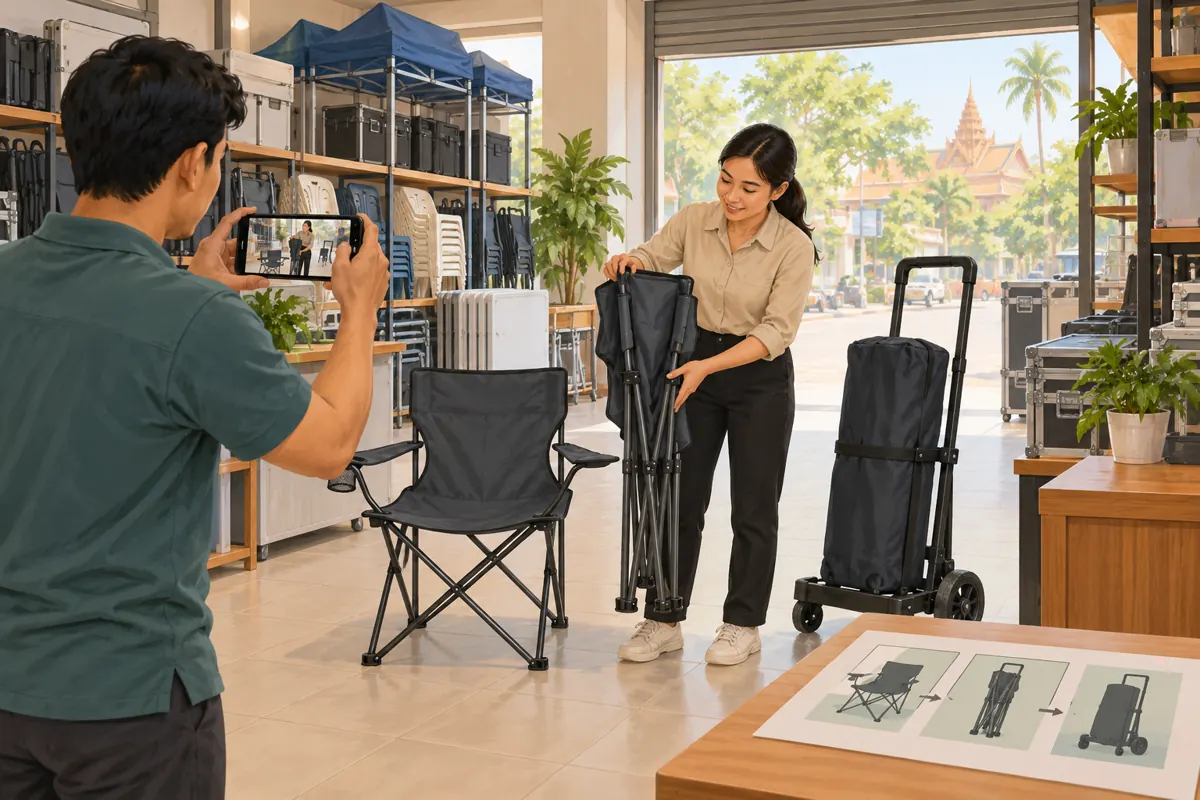
Choose a follow-up that answers a practical uncertainty. If folding chairs receive attention, show the actual chair open, folded and ready for transport. Explain what customers should ask before arranging collection. If pedestal fans are another priority, make a separate explanation of the supplied equipment and the information the shop needs about the venue. Keep all claims tied to the items actually available.
A hypothetical shop might publish a chair-transport demonstration first because staff can film it clearly that afternoon, then prepare a fan explanation after checking the stock. Tell readers that their feedback helped choose the topics. Avoid presenting the poll as proof that a product is Cambodia’s favourite or that a package is selling quickly. The useful promotional result is a clearer answer customers can consult.

9. Move from interest to a private rental enquiry
Give the demonstration a straightforward next step: message the shop with the event date, general delivery area, equipment categories and approximate quantities. Ask for the exact address only when it is needed to assess the arrangement. A customer who selected chairs in the poll should still be free to request something different or decide against renting.
Use a consistent staff response that checks availability before making commitments. Confirm the equipment, rental period, transport arrangement, charges and applicable conditions through the shop’s normal process. Keep three statuses separate in working notes: requested information, received a quotation and confirmed a booking. Poll participation does not automatically move someone into any of those categories, and a message alone does not confirm stock.
10. Assess an SMM service against the actual objective
The supplied jak-follow.com catalogue includes the exact title Telegram - Views ~ INDIA ~ BOT ~ 1 POST. Its listed category concerns Telegram post views, and the supplied description is empty. Those details do not establish Cambodian audience delivery, genuine interest, poll participation or rental enquiries. The geographical and bot wording in the title should not be converted into verified audience claims.
For this workflow, that listing does not provide evidence of a way to collect useful equipment preferences. None of the supplied Telegram examples establishes a poll-response service. Do not assume one exists or place an order expecting views to become votes. If the objective is understanding customer questions, direct invitations to relevant readers and careful follow-up are better aligned with the task.
If the business separately considers a panel service, review its current terms and relevant platform rules before deciding. Keep any service delivery record apart from the poll findings. Purchased engagement is not evidence of genuine interest, sales, ad delivery or Cambodian users. A change in a displayed count must not become a claim that the demonstration reached qualified local renters.
11. Correct mistakes before repeating the exercise
Common mistakes include asking which equipment people need without specifying the planning context, offering overlapping categories and implying that a selection holds stock. Another is treating the most selected item as an instruction to purchase inventory. Correct those problems by narrowing the question, reviewing the options and stating exactly what decision the responses will inform.
After publishing the demonstration, note the new questions customers ask. Did they need clearer transport information, dimensions or confirmation of what comes with the rental? Those questions can guide the next post. Preserve the poll wording with your notes so later comparisons remain honest. If the wording, audience or available products change, explain the change instead of presenting two polls as directly comparable evidence of rising demand.
Frequently asked questions
Should we include a none-of-these option?
It can be useful if you need to know that the offered categories missed someone’s needs. Explain that it should be selected alone, because multiple selection can otherwise produce contradictory answers. For a short content-planning exercise, an invitation to message the shop about another item may be easier to interpret. Do not promise that every requested item is available.
Can we advertise a chairs-and-fans package because both options were popular?
You can explore a package after checking stock, costs and service arrangements, but the aggregate poll does not prove the same people wanted both items. Prepare a clear hypothetical package proposal or ask interested customers about their requirements. Only advertise actual terms once the shop has approved them, and do not describe the package as customer-validated solely from separate option totals.
What should we do when almost nobody responds?
Check whether the question is easy to understand and whether relevant readers saw the invitation. Review genuine customer conversations for recurring uncertainties, then make one useful demonstration from that evidence. Avoid buying engagement to make the exercise appear successful. Record limited participation honestly; an unanswered poll is a reason to reconsider the approach, not evidence that nobody needs the equipment.
Should staff contact everyone who votes?
A preference selection should not be treated as a request for individual sales contact. Provide an optional route for readers to ask for a quotation themselves. This also works when voting is anonymous. When someone does enquire, collect the details needed for that rental rather than trying to reconstruct their intentions from the poll.
How can we judge whether the workflow helped?
Look for practical changes: the team published a clearer demonstration, customers could identify the equipment, or enquiries included information staff needed to quote. Record those observations with their context. Keep any booking outcomes tied to actual booking records, and avoid attributing them entirely to the poll when customers may also have encountered other posts or recommendations.
Explore the current service catalogue, create an account, or ask a specific question through support tickets.
- Telegram: Polls 2.0—Visible Votes, Multiple Answers, and Quiz Mode
- Telegram technical documentation: Poll constructor and settings
Prepared with AI assistance. Illustrations explain the workflow and do not represent customer results.