20/10/2026 14:56
What Should the First Message Say? Telegram Business Chat Links for Cambodian Rice-Cooker Repair Shops
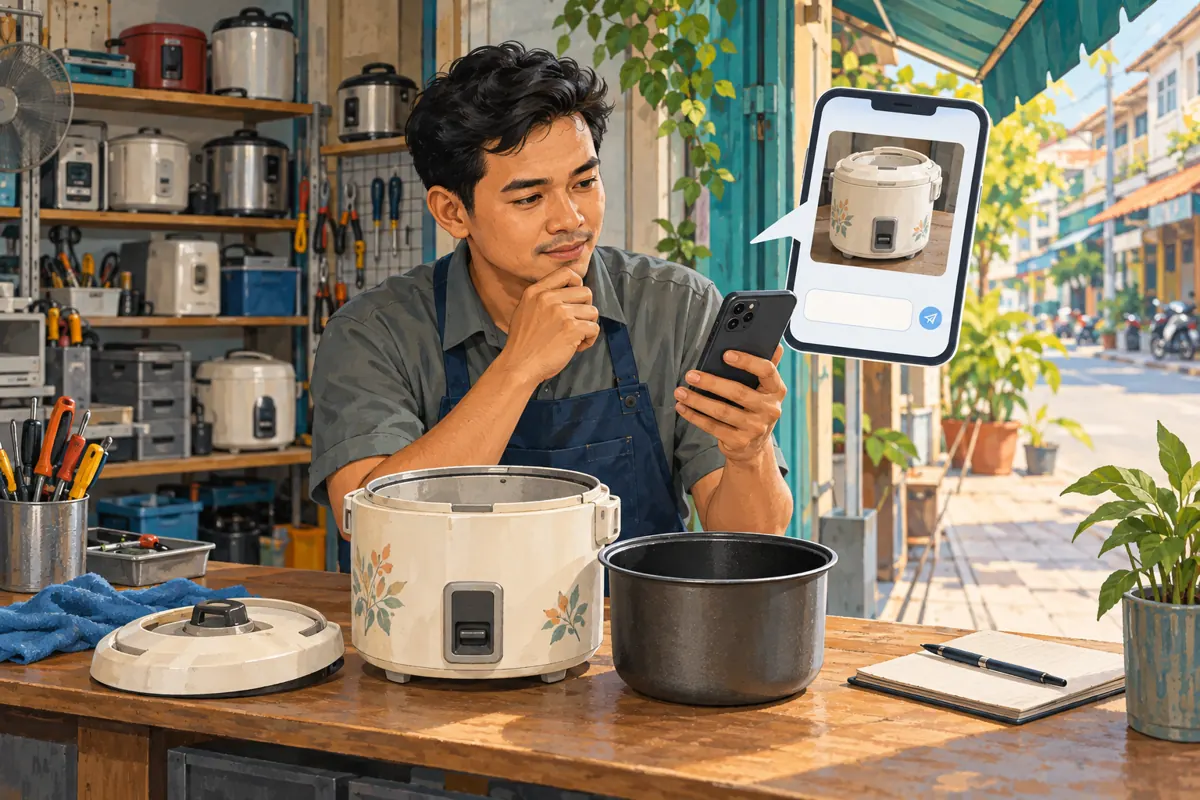
A rice-cooker repair demonstration can answer one question while leaving another unresolved: what should an interested customer send the shop? A vague invitation to contact you often produces a greeting without a model, problem description or useful context. Telegram Business chat links can help by putting a suggested first message in the customer's message field. For a Cambodian repair business, the practical opportunity is to make that first exchange easier to understand. This guide follows a hypothetical Phnom Penh shop preparing a demonstration and its enquiry link before spending on promotion. The aim is a useful conversation, with a clear distinction between opening a link, sending a request and agreeing to repair work.
1. Start with the question your demonstration creates
In this hypothetical example, the shop posts a short demonstration showing the outside of two rice cookers it accepts for assessment. Viewers might reasonably ask whether their own model is accepted. That is the next step the promotion should support. Asking them to subscribe, share, request a price and arrange delivery in the same closing sentence makes the decision harder. Choose one invitation: ask whether the shop can assess your rice cooker.
Write down what staff need to answer that question. A model name, if known, and a brief description of the problem may be enough to begin. A photograph can follow in the conversation. Do not design the first message around everything the shop might eventually need. Delivery details, final pricing and permission to proceed belong later, once staff understand the enquiry. This keeps a promotional contact from being mistaken for a confirmed job.
2. Understand what the link actually does
Telegram's official Business announcement explains that chat links open a conversation with the business and place a suggested message in the user's input field. They can be shared inside or outside Telegram. The customer still needs to review and send the message. An opened conversation is therefore an opportunity to enquire, not proof that someone has submitted a request.
Telegram's technical documentation currently says that creating and managing these links requires Telegram Business, included in Premium subscriptions. Check the available Business settings and subscription terms in the account you intend to use before building the campaign around the feature. Do not assume an ordinary profile link offers the same prepared-message workflow. If the feature is unavailable, publish a concise instruction explaining what customers should include when contacting the shop, then test that simpler route. The customer-facing task can remain clear even without a prepared message.
3. Write a suggested message customers can honestly send
A suitable English draft for the hypothetical shop is: “Hello, I saw your rice-cooker assessment demonstration. Can you check my model? Model, if known: ____. Problem I noticed: ____.” For a Khmer-speaking customer audience, have a fluent staff member prepare natural Khmer wording and review it on a phone. Keep genuine model names as printed on the appliance. The language of this article does not need to determine the language of the shop's customer messages.
Avoid inserting claims such as “I want to book today” or “I agree to your repair price.” The visitor has not necessarily made either decision. Also avoid filling the message with a marketing slogan or a long campaign identifier. Read the draft aloud as if you were a customer whose appliance had stopped working. If it sounds like the shop speaking about itself, rewrite it. Leave room for uncertainty: customers should be able to say they do not know the model or cannot describe the fault.
4. Create and name a link for one clear purpose
Open the intended business account's Telegram Business settings and look for its chat-link controls. Interface wording may differ between clients, so follow the labels shown in your app. Create a link with the approved suggested message and give it an internal name that identifies its purpose, such as “Rice cooker assessment — demonstration.” Telegram documents an optional link title that is visible only to the creator, making it useful for management.
Keep a small working record containing the internal name, suggested message, destination account, placement and person responsible for replies. Start with a single demonstration rather than generating a different link for every minor caption change. Separate links become useful when they support a real operational distinction, such as assessment enquiries versus requests about collecting an existing repair. If two links lead staff to perform exactly the same task, maintaining both may add work without improving the customer's experience.
5. Test from the customer's side before promotion
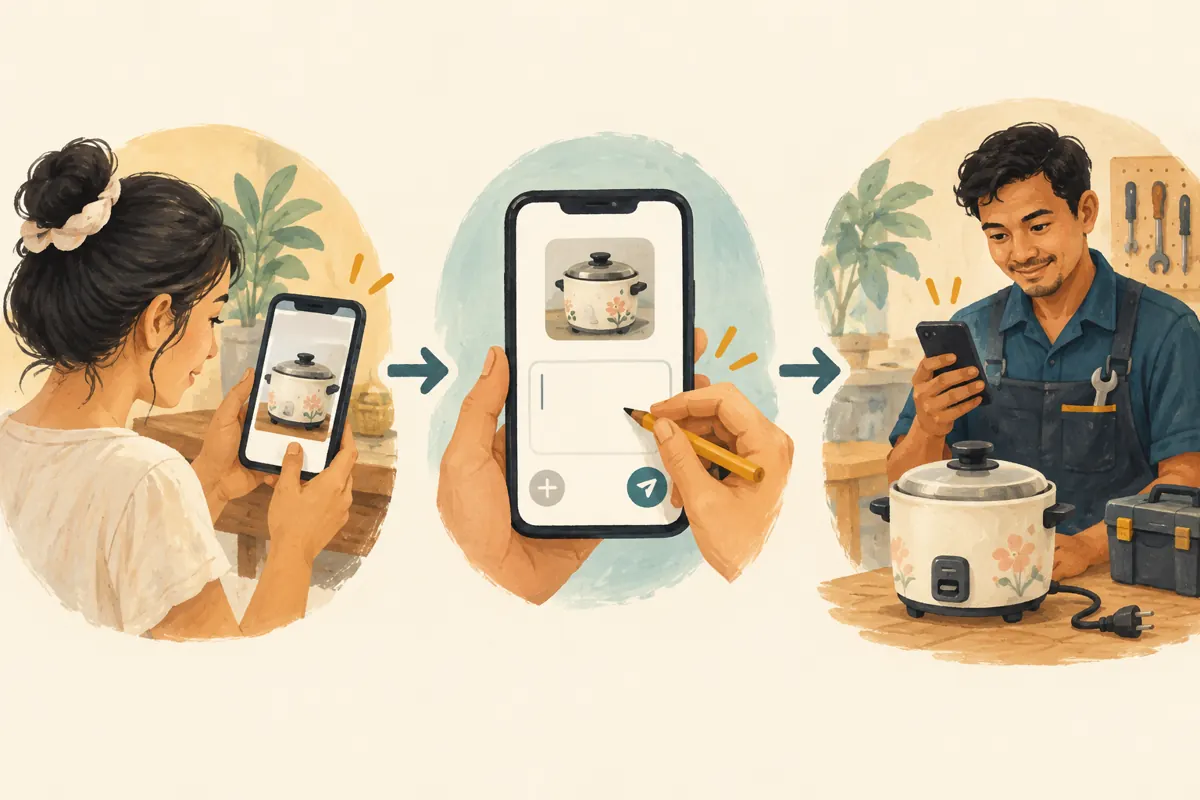
Ask a colleague to open the exact link from the location where it will appear. Test the published-style caption or draft page, not merely the link copied into your own notes. Confirm the destination account, visible business identity and suggested wording. Then have the tester replace the blanks, change a sentence and send a clearly marked test enquiry. Staff should verify that the received message makes sense without needing to see the original demonstration.
Check Khmer rendering if the prepared message uses Khmer, including line breaks and model names mixed with other characters. Try the route on another available phone or client when practical. Record obstacles such as an unexpected app-opening prompt or unclear destination name. Do not treat your own familiar account view as a substitute for this check. Finally, tell the replying staff which messages are tests so they do not enter them into the customer enquiry record as genuine demand.
6. Make the promotional promise match the first exchange
Use a caption that explains both the subject of the demonstration and the next action. A hypothetical closing line could say: “Unsure whether we assess your model? Open the enquiry link, add the model if known, and describe what happened.” State any actual limits on the shop's service area or accepted appliances in the surrounding content. A link cannot compensate for a video that appears to promise repairs the shop does not offer.
Keep the destination recognisable. If the demonstration uses a shop name but the link opens an unexplained personal name, a visitor may reasonably hesitate. Review the public identity before sharing the route widely. Where the placement supports a clickable link, test that placement directly. If viewers need an alternative route, provide the shop's verified public contact reference and the same short enquiry instruction. Avoid scattering competing contact destinations throughout the post; staff should know which inbox the promotion is intended to reach.
7. Prepare the reply that follows the suggested message
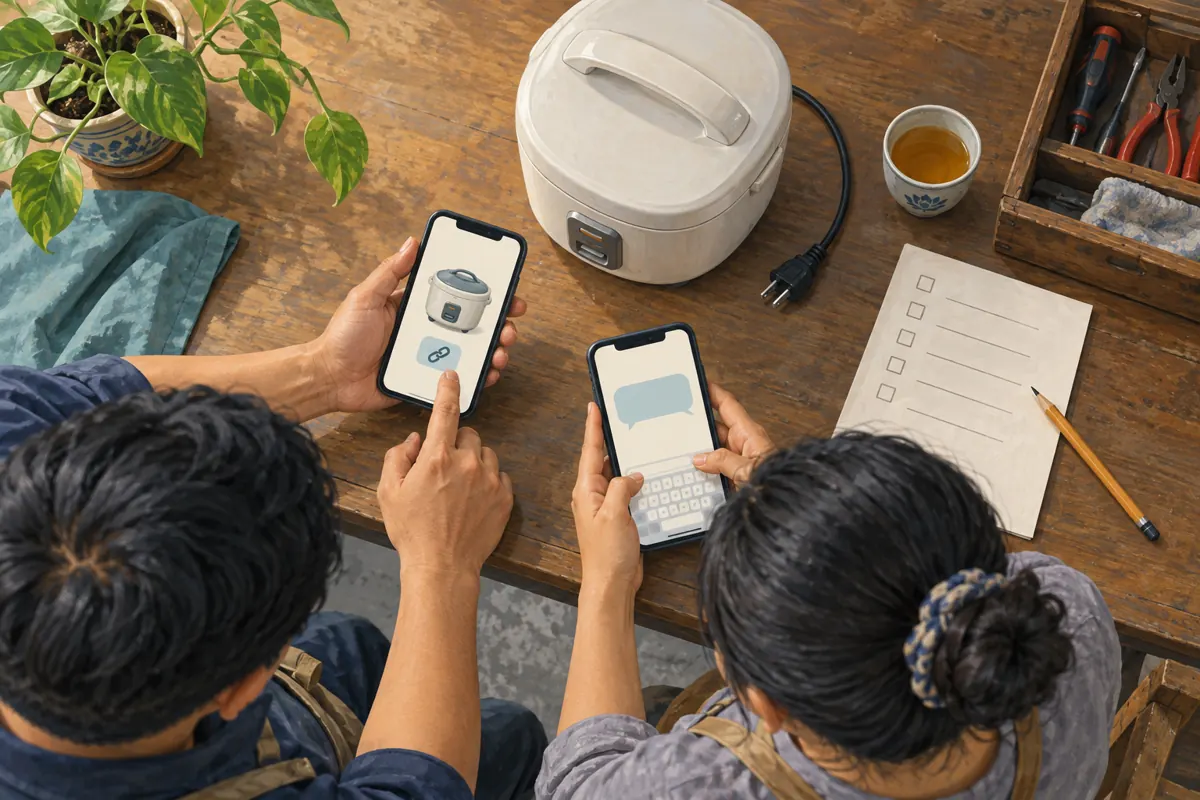
The first reply should acknowledge the customer's actual question and request only the missing information. In the hypothetical shop, a customer might enter a brand but leave the problem blank. Staff could ask what the customer noticed and request an exterior photograph if needed. They should not assume that a model name establishes the fault, confirms parts availability or determines the repair price.
Assign someone to review incoming enquiries during the shop's stated response periods. Decide who handles an unfamiliar model and who can confirm an assessment arrangement. Keep the next step explicit: more information requested, assessment proposed or collection details being discussed. A customer who sends the prepared message has started a conversation; staff still need to establish what the business can offer. If the shop is temporarily unable to accept work, adjust the promotion promptly instead of allowing the prepared wording to suggest that assessments are readily available.
8. Keep SMM catalogue services separate from enquiry tools
The supplied jak-follow.com catalogue includes the exact service name “Telegram - Channel/Group Members ~ 𝗥𝗘𝗙𝗜𝗟𝗟 30D ~ 10k/days ~ INSTANT”. Its name identifies a channel/group membership service. The supplied description is empty, so the title alone does not establish delivery quality, audience location or the meaning and conditions of its other claims. It does not describe a Business chat-link setup service or a source of repair enquiries.
If reviewing an SMM panel option, first identify the asset involved: a channel, group, post or business conversation. Do not submit a Business chat link to a membership service merely because both use Telegram. Confirm the documented input requirements and applicable platform rules before any purchase. Purchased engagement is not evidence of genuine interest, Cambodian users, sales or official ad delivery. If the objective is better repair conversations, improving the demonstration, suggested message and reply process may be the more relevant use of the budget. There is no requirement to order a service.
9. Read link activity without turning it into sales evidence
Telegram documents a view counter for Business chat links, recording times the link is resolved through actions such as clicks or scans. Treat that as link activity. It is not a count of confirmed customers or accepted repair jobs. Staff testing also matters when interpreting the record. Note when tests happened, and avoid labelling the counter as unique enquiries.
Maintain separate observations for link activity, actual customer messages and agreed next steps. In a hypothetical review, a shop might notice link activity but receive messages asking only where it is located. That suggests the promotion may need clearer location information; it does not prove a technical failure or poor-quality visitors. Likewise, a useful conversation can end without a repair because the model is outside the shop's scope. Record that reason where known. Keep any panel order's delivery record separate, and avoid claiming that a change in one total caused a change in another.
10. Fix the specific friction and maintain the route
Review the wording after staff have handled genuine conversations. If customers repeatedly leave the model blank, make “if known” more prominent and explain that a photo can follow. If they interpret the message as a booking, replace booking language with an assessment question. Change one meaningful element at a time so staff can judge whether conversations become easier to handle. Do not rewrite the entire campaign after one unusual message.
Keep a dated copy of the prepared message and a list of active placements. Telegram supports editing and deleting Business chat links, but any change should be followed by another test of the customer route. Before deleting a link, check whether it still appears on posts or printed material. Common mistakes include keeping an outdated service promise, using a contact nobody monitors and asking for unnecessary personal details immediately. A short, accurate invitation that staff can answer consistently is a stronger foundation for promotion than a complicated message nobody maintains.
Frequently asked questions
Does tapping the link automatically send the prepared message?
No. The link opens the business conversation and places suggested text in the message field. The customer can review or edit it before sending. This is why staff should count received enquiries separately from link activity and avoid treating every opening as a request for service.
Should every demonstration have its own chat link?
Only when the distinction helps you manage enquiries or understand a placement. Start with one clear purpose. Separate links for model assessment and collection questions may help staff, while many near-identical links can become difficult to maintain. Record where each active link appears.
Can the first message ask for a delivery address?
It can be written that way, but a full address is usually unnecessary for an initial model-assessment question. Ask for information as it becomes relevant. Establish whether the shop can help first, then discuss collection or delivery privately if the customer wants to proceed.
Will a Telegram membership service bring local repair customers?
The supplied service information does not establish that outcome. A membership service title cannot demonstrate Cambodian audience origin, repair needs or purchasing intent. Evaluate the customer journey through actual conversations and agreed work, and keep any purchased service activity out of claims about genuine local demand.
What if customers delete the suggested wording?
Reply to what they actually send. The message is an aid, not a compulsory form. Ask a concise follow-up when information is missing. If customers repeatedly replace the draft completely, review whether its wording is too long, too formal or unrelated to the question raised by the demonstration.
Explore the current service catalogue, create an account, or ask a specific question through support tickets.
- Telegram: Introducing Telegram Business
- Telegram API: Telegram Business — business chat links and subscription requirements
- Telegram API: businessChatLink — titles, prepared messages and view counters
Prepared with AI assistance. Illustrations explain the workflow and do not represent customer results.