
20/10/2026 05:14
Who Gets the First Reply? Telegram Greetings for Cambodian Air-Conditioner Cleaning Shops

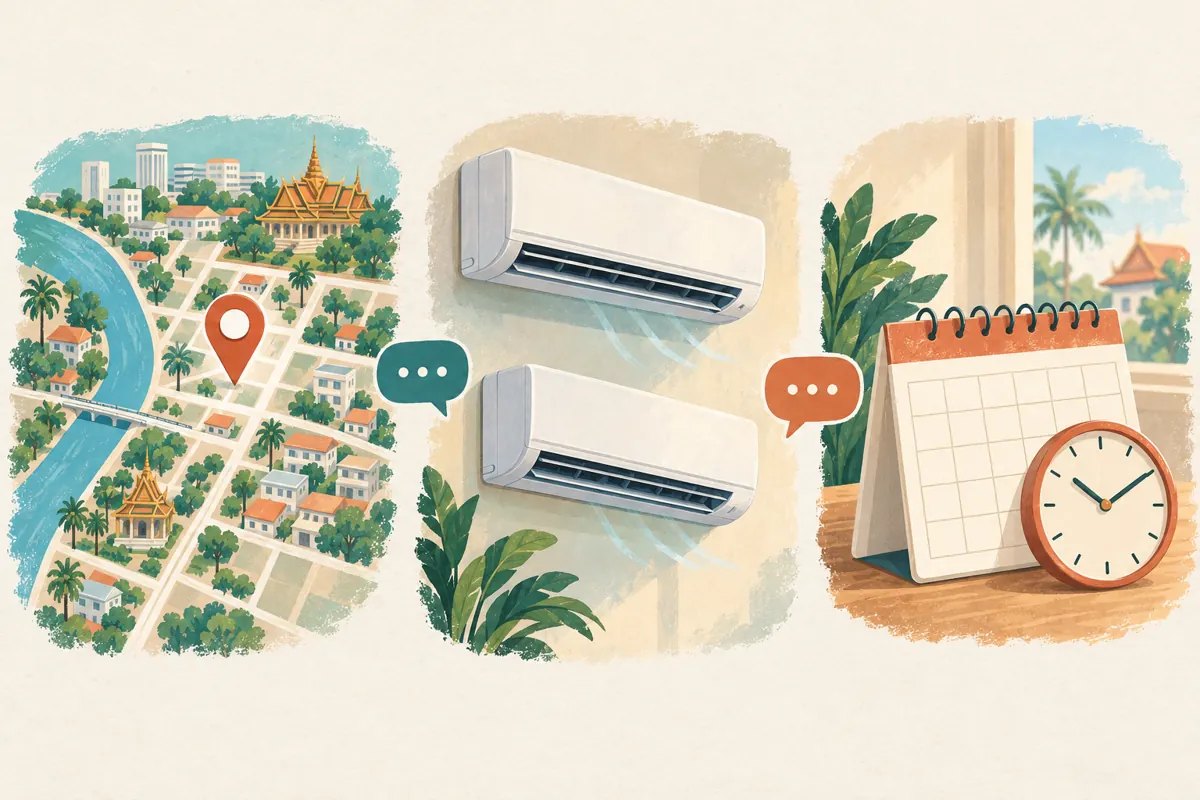
A cleaning demonstration can attract attention without giving a Cambodian air-conditioner service team enough information to arrange a visit. Someone messages “How much?” while the owner is working, and the conversation waits. A useful automatic greeting can explain what to send next: the neighbourhood, number of units and preferred visit day. The important decision is where automation should stop. This workflow shows how to prepare a Telegram greeting, choose its recipients, test returning conversations and connect promotion to a human booking process. Any business situations and sample messages below are hypothetical, not customer results.
1. Give the greeting one practical job
For an air-conditioner cleaning shop, the greeting’s job is to make the first enquiry easier to answer. It should acknowledge the message and request a small amount of useful information. It should not diagnose a fault, confirm a technician’s availability or announce that an appointment exists. Those decisions require someone to examine the request and the working schedule.
Consider a hypothetical Phnom Penh team promoting a demonstration of its cleaning process. A viewer may need routine cleaning, help with water leakage or advice about a unit that has stopped cooling. A greeting that assumes everyone wants the advertised cleaning package can send the conversation in the wrong direction. Begin with the customer’s need, then collect enough context for a person to respond. Define success as a clearer next exchange, rather than simply an automatic reply being sent.
2. Understand the trigger before writing the message
Telegram describes business greetings as automatic messages for people contacting you for the first time. You can also specify an inactivity period after which a new incoming message triggers the greeting again. Automated business messages can exclude particular chats or categories. These controls matter when one account handles customers, relatives and colleagues. See Telegram’s official explanation in [Introducing Telegram Business](https://telegram.org/blog/telegram-business).
This article concerns private customer conversations. Treat the greeting as an introduction that may appear again, not as an intelligent assessment of what someone just wrote. Wording such as “Thank you for contacting our cleaning team” works for both a first enquiry and a returning customer. “Congratulations on booking your first service” assumes facts the greeting cannot establish. Before enabling anything, decide whether the same wording would remain appropriate if a previous customer returned with a question about an earlier visit.
3. Ask for information in the order staff need it
Start with the broad service area, the number of units and the type of help requested. These details let staff decide whether the enquiry fits the service offered. Ask for a preferred day as a preference, without presenting it as a reservation. Leave the exact address and access arrangements for the next exchange, once the team knows it can consider the job.
A hypothetical English draft is: “Thanks for contacting our air-conditioner cleaning team. This is an automatic greeting. Please send your neighbourhood, how many units need attention, and whether you need routine cleaning or help with a problem. You can also suggest a visit day. Our team will review your message and confirm availability separately.” For a Khmer-speaking customer base, have a fluent staff member prepare the customer-facing Khmer version. Keep the request short enough that answering feels easier than abandoning the conversation.
4. Make photos optional and questions manageable
A photo can help distinguish a wall-mounted unit from another installation, but it should not become an unnecessary barrier. Some customers will be messaging away from the property. Others may not know the model or have a useful picture. Allow a simple description first, then request a specific photograph if a staff member needs it.
Avoid asking customers to climb, open equipment or photograph inaccessible components for an initial enquiry. A normal room-level picture may be enough to explain what they mean. Ask them to keep people, private documents and unrelated possessions out of the frame where practical. This is also a reason to avoid requesting a complete home address in the automatic message: collect details when they serve the next decision. A concise greeting should start a useful conversation without turning it into a lengthy inspection form.
5. Configure recipients and repeat timing deliberately
Open Telegram’s settings and look for Telegram Business, then its greeting controls. Review access in the account you actually use for customer enquiries before planning around the feature. Telegram’s current technical documentation lists Business features as included for Premium subscribers; it does not establish the price you will see locally. Consult [Telegram Business documentation](https://core.telegram.org/api/business) and the options displayed in your app.
Write down which conversations should receive the greeting before selecting recipients. Exclude staff and personal conversations where appropriate, but do not assume every saved contact is personal: existing customers may also be in the address book. Choose the offered inactivity setting with returning enquiries in mind. A repeat greeting can remind an occasional customer what details help, yet sound careless during an unresolved issue. Make the wording tolerant of both situations, and record the chosen settings so another authorised team member can review them.
6. Test the experience from both sides
Use a willing colleague’s suitable test account to check an eligible first-contact conversation. Read what arrives on the recipient’s phone, not only what looks correct in the editor. Check line breaks, the order of questions and whether the automatic nature of the reply is clear. Then test an excluded conversation to confirm that personal or staff chats behave as intended.
A conversation that already exists may not reproduce a first-contact trigger. Record that limitation instead of treating every missing greeting as a fault. Likewise, a repeat-after-inactivity rule needs an eligible conversation and the relevant elapsed period; an immediate follow-up message does not demonstrate that behaviour. Keep a short test record describing the recipient category, expected outcome and observed result. If a greeting and an away message might both appear, check the combined experience for duplicated questions or contradictory response expectations before promoting the account.
7. Let a person complete the booking conversation
Assign responsibility for checking incoming enquiries during the periods your team can actually cover. When someone replies, staff should acknowledge the details already provided and ask only for what remains missing. Repeating the entire greeting manually makes the customer do the same work twice. If the person asked about a fault, clarify the request before offering routine cleaning.
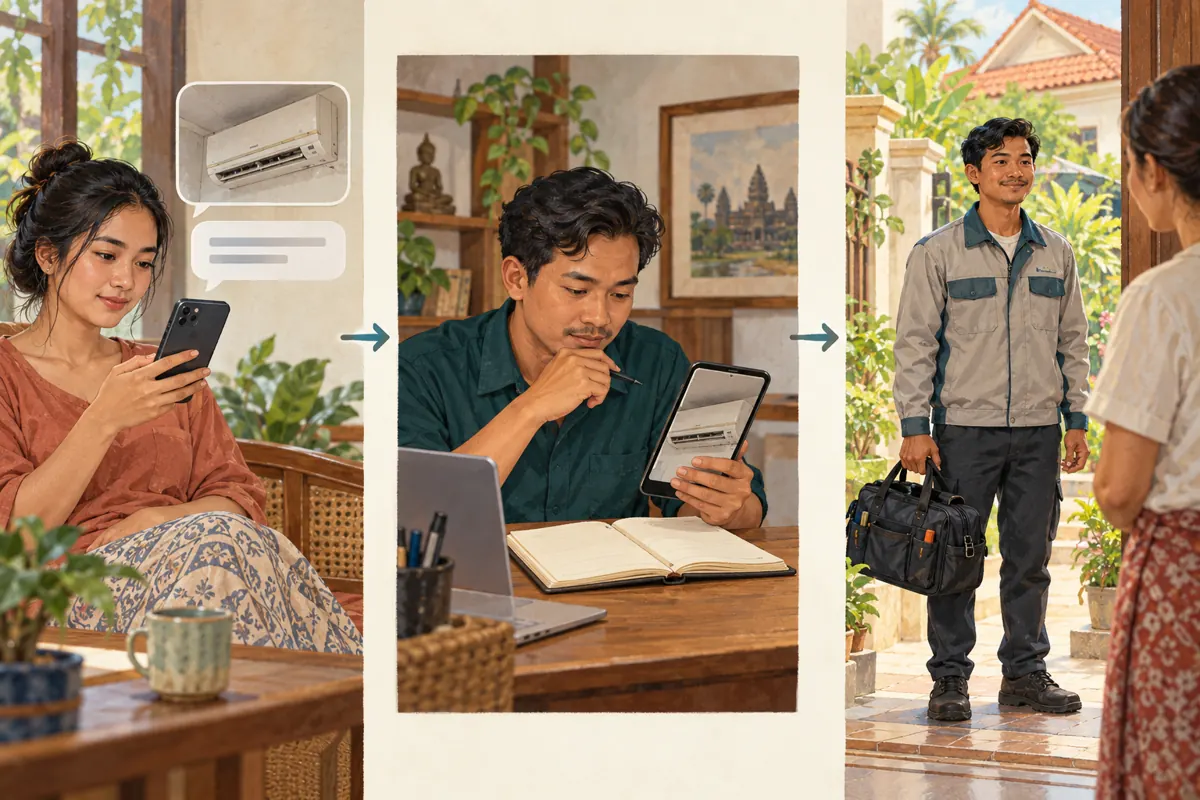
In a hypothetical exchange, a customer sends a neighbourhood, two units and a preference for Saturday. The staff reply should explain whether the area is covered, ask any necessary installation questions and discuss an available time. A preferred day becomes an appointment only through the shop’s actual confirmation process. State the agreed scope and any unresolved price conditions clearly. If the schedule cannot accommodate the request, say so directly and offer a genuine alternative only when one exists.

8. Connect the promotional post to the same request
The public demonstration and the private greeting should prepare customers for the same conversation. If a post invites viewers to enquire about cleaning, its closing instruction can ask them to message the business with their neighbourhood and number of units. That makes the greeting familiar when it arrives. Avoid a post that promises immediate appointments while the greeting says staff still need to review availability.
Use a realistic service area and explain what the demonstration shows. A video of one accessible wall-mounted unit does not establish that every installation has the same work requirements. Keep temporary offers out of an evergreen greeting unless someone is responsible for updating them. Before expanding promotion, confirm that staff can answer the enquiries the content invites. If the team is already struggling to review messages, improve that process before spending more to draw attention to it.
9. Separate SMM catalogue activity from customer conversations
The supplied jak-follow.com catalogue includes the exact public service name “Telegram Post Views [Last 1 Post]”. Its wording identifies a post-view offering, but the supplied description is empty. It does not document a greeting setup service, private-chat enquiries, local customer targeting or bookings. The name alone also leaves operational questions about which post is selected; clarify the applicable public instructions before considering an order.
Purchased engagement is not evidence of genuine interest, sales, advertising delivery or Cambodian users. A post-view order cannot tell you whether a customer understood the greeting or whether your service area suits them. Keep any panel order record separate from the enquiry log. For this particular business problem, a greeting test and a clear staff response process are more directly useful than a larger displayed count. Do not purchase a service on the assumption that it will generate the missing conversations.
10. Review confusion and correct the smallest useful detail
Review recent enquiries for recurring obstacles: customers omitting their neighbourhood, mistaking a preferred date for confirmation, or asking whether a human has read the message. Note the issue without copying unnecessary personal information into your review document. Then change the relevant sentence. If customers cannot tell which area you serve, clarify coverage in the promotional post rather than adding several paragraphs to the greeting.
Common mistakes include sending a full catalogue immediately, promising an unrealistically fast personal response and treating an automatic acknowledgement as a completed customer-service task. Another is using the same sales wording for returning complaints. Keep a dated copy of each greeting revision and the reason for changing it. Review again when staffing, coverage or the booking process changes. The useful outcome is a conversation staff can handle accurately, with customers understanding what happens next.
Frequently asked questions
Should the automatic greeting include a cleaning price?
Only include pricing that the business can explain accurately for the stated scope. If installation type, access or the requested work affects the quote, ask for the relevant context first. A greeting that presents a conditional starting price as a final charge creates avoidable confusion before staff have reviewed the enquiry.
What if a customer already supplied all the requested information?
The staff response should recognise that information and move forward. Do not ask the person to repeat it merely because the greeting contains a standard request. Write the greeting so customers can skip details they have already sent, and treat their original message as part of the same conversation.
Can the greeting promise that someone will reply immediately?
The automatic acknowledgement and a personal response are different events. Promise a human response time only if staffing supports it. Otherwise, explain that the team will review the request during its working period. Someone must still monitor unanswered enquiries; an automatic message does not remove that responsibility.
What should a returning customer receive after an earlier problem?
Use neutral greeting wording that does not assume the previous service went well or that the person wants another booking. When staff see an unresolved concern, respond to that concern directly. Review recipient controls and the repeat setting if automated introductions repeatedly interfere with continuing customer conversations.
Is an SMM panel order necessary to test this workflow?
No. A willing test contact and a review of the recipient settings can establish whether the greeting works as intended. Panel activity is separate. Even if a post-view service delivers its stated activity, that does not validate the greeting, show local buying intent or confirm that a technician visit was booked.
Explore the current service catalogue, create an account, or ask a specific question through support tickets.
Prepared with AI assistance. Illustrations explain the workflow and do not represent customer results.