
22/10/2026 17:34
Scan to Browse or Ask? Telegram QR Cards for Cambodian Refill-Bottle Shops

A customer examining an empty pump bottle may want to compare other sizes later. A printed Telegram QR card can give that customer a convenient route back to the shop’s information. But a readable code is only the beginning: the destination must match the promise on the card, and the visitor must understand what to do next. For Cambodian refill-bottle suppliers, this creates a practical bridge between a physical counter and social media promotion. This guide explains how to choose that destination, prepare the card, test a real print, and evaluate the response without confusing Telegram activity or SMM-panel delivery with confirmed buying interest.
1. Give the card one clear job
Start with the question customers ask at the counter. Do they want to browse bottle shapes, check whether a pump fits, or request a wholesale quotation? These are different tasks. A card labelled for product browsing should lead to useful product information. A card inviting a question should make the enquiry route obvious. Avoid a vague invitation to scan when staff cannot explain what the visitor will find.
Consider a hypothetical Phnom Penh shop supplying empty bottles to small retailers. Customers frequently photograph samples but later forget which cap belongs to which bottle. The shop chooses a card whose purpose is to help them revisit its bottle-and-cap guide. That purpose determines the destination and the content to prepare. It also gives staff a meaningful test: can a new visitor find the pictured combination without asking the cashier to explain the whole channel?
2. Choose a channel or a conversation deliberately
Telegram documents QR sharing for public usernames, including groups, channels and bots. Its channel FAQ explains that public channels have usernames and can be found through search. A channel therefore suits a browsing task when the shop wants visitors to read shared product information. These are documented platform features; whether they suit a particular shop remains an editorial and operational decision. [Telegram QR guidance](https://telegram.org/blog/reactions-spoilers-translations) and [Channels FAQ](https://telegram.org/faq_channels).
For the hypothetical bottle shop, a public product channel is the appropriate first stop for browsing. If the card instead promises a fitting enquiry, choose the shop’s approved contact destination and test the route into that conversation. Do not use an employee’s personal account simply because its code is convenient. Write the chosen destination into the print brief, including its exact username and intended purpose, so the designer and shop owner approve the same thing.
3. Make the destination useful before designing the card
Prepare the information the card promises before distributing it. A bottle guide should distinguish the bottle body, closure, pump and any separately sold component. Use consistent product identifiers across photographs and captions. Explain whether an image shows a sample or stock currently offered, and direct visitors to ask for confirmation when availability changes. Do not let a beautiful photograph imply that every pictured combination is available.
For Cambodian customers, have a fluent Khmer reader check the practical meaning of the destination content and printed instruction. Retain genuine model codes exactly, even when the surrounding explanation uses Khmer. If English helps some buyers, add a concise translation without shrinking everything into unreadable type. A useful first screen should establish the shop’s identity, show what information is available, and explain where to ask about a particular bottle. This is more valuable than filling the opening view with generic promotional claims.
4. Generate the code from the approved destination
Telegram’s official instructions describe opening the QR option beside a username or from a chat’s information page, choosing its appearance, and sharing or printing the result. The precise arrangement can vary with the app version. Open the approved destination first, then inspect its username before generating the asset. [Telegram’s themed QR instructions](https://telegram.org/blog/reactions-spoilers-translations).
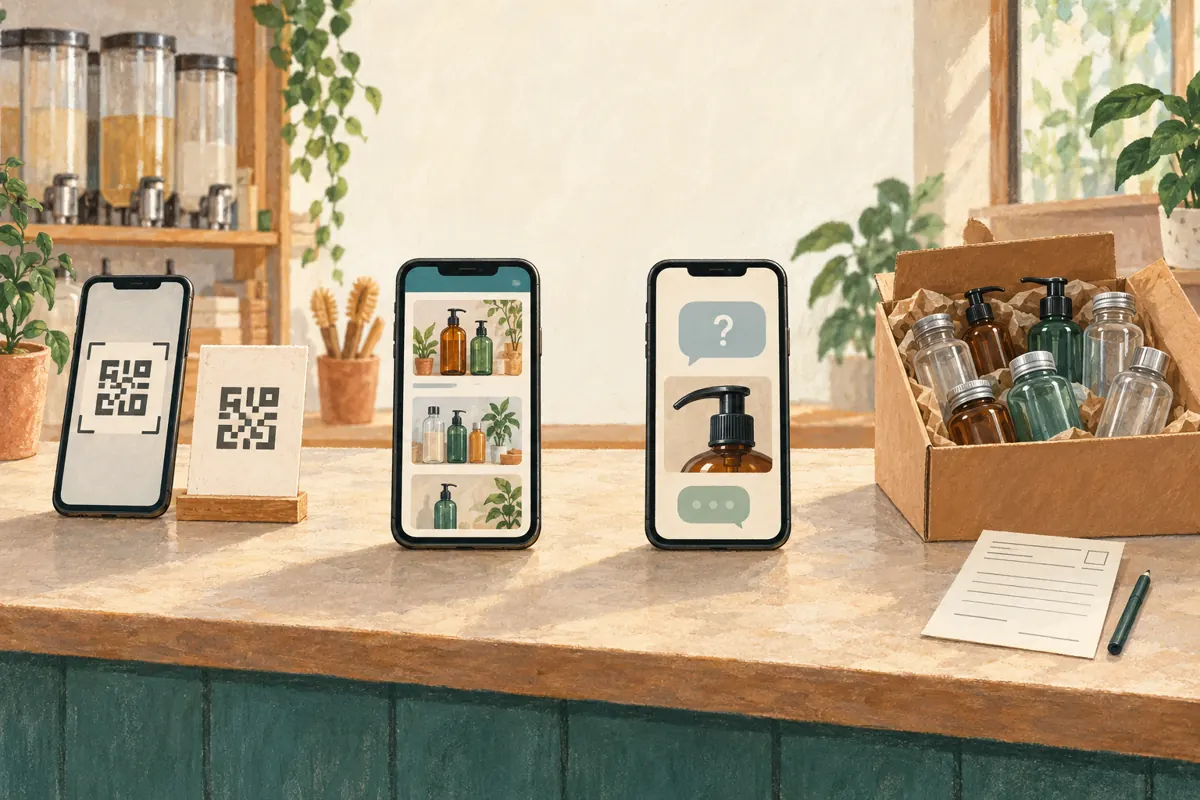
Save the generated code with the approved print artwork and record which destination it represents. Ask the designer to preserve the code itself rather than redraw its pattern. Keep a readable username or approved address nearby as a fallback for customers who cannot scan comfortably. Before approving the artwork, compare that printed address with the destination reached by the code. The illustrations accompanying this article contain deliberately nonfunctional QR-like symbols; they are explanatory images and must never be substituted for a working Telegram code.
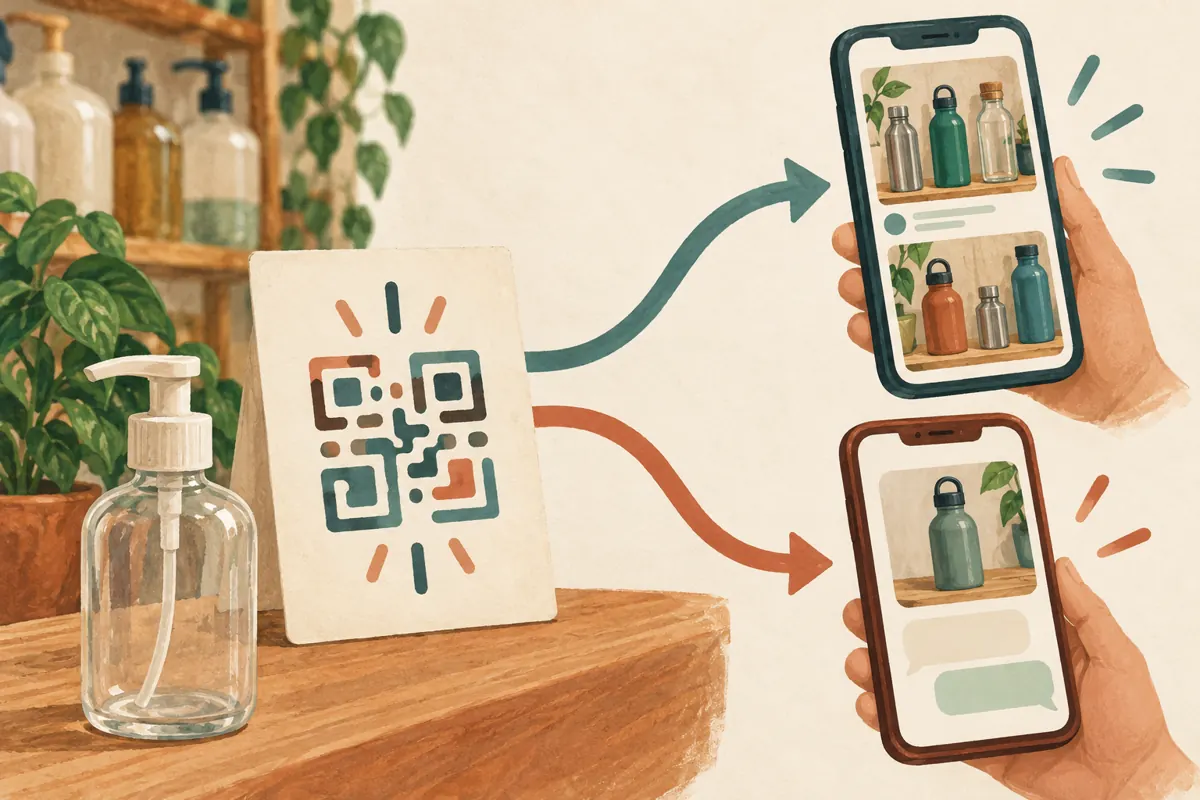
5. Design for the counter where people will scan
Treat scanning conditions as part of the design brief. A card inside a glossy holder may reflect an overhead light. A sticker wrapped around a narrow bottle may curve the pattern. A small card beside several promotional signs may be difficult to distinguish. Prefer a clear, flat presentation with strong contrast and space around the code, then verify the actual result rather than relying on how crisp the artwork looks on a large monitor.
Place a short explanation next to the code, such as an invitation to browse bottle options on Telegram. Have the shop approve its Khmer wording for the intended customers. Keep price offers and temporary stock claims out of a long-lived card unless someone is responsible for replacing it. A product-information card can remain useful across stock changes, while a printed promise about a particular promotion creates a separate maintenance obligation.
6. Test the printed journey with an unfamiliar visitor
Print a proof at its intended size and put it in the proposed holder or location. Ask a colleague who did not design it to scan using their usual phone camera. Observe the sequence from recognising the card to reaching the destination. Check the displayed account or channel identity, the first visible content, and the next action. A code that opens successfully can still fail the business task if the visitor lands somewhere confusing.
Repeat the check under the shop’s ordinary lighting and, where practical, on another phone. Include a tester who is not already subscribed to the channel, because an established customer may recognise information that a newcomer cannot. Record observable problems: reflection prevented recognition, the printed username was too small, or the visitor could not find the cap guide. Fix each problem and retest the changed proof. Do not record a successful staff test as a customer lead.
7. Pilot distribution and keep physical copies maintainable
Begin with a limited placement that staff can observe, such as one counter display and a small batch of bag inserts. This is a practical pilot, not a promised performance formula. Explain the card briefly when relevant to a customer’s question, and let the customer decide whether to use it. Keep the spoken invitation consistent with the destination: browsing information should not be described as a confirmed reservation or a completed order.
Maintain a simple placement record identifying the approved artwork, destination, print batch and display location. Include cards handed to delivery staff or partner retailers, because those copies can outlive the counter display. Before changing the destination’s username or replacing the channel, test what existing cards will open and plan their replacement. Inspect physical signs periodically for damage or unexpected replacement stickers. A working digital destination does not tell you whether the printed item in the shop is still usable.
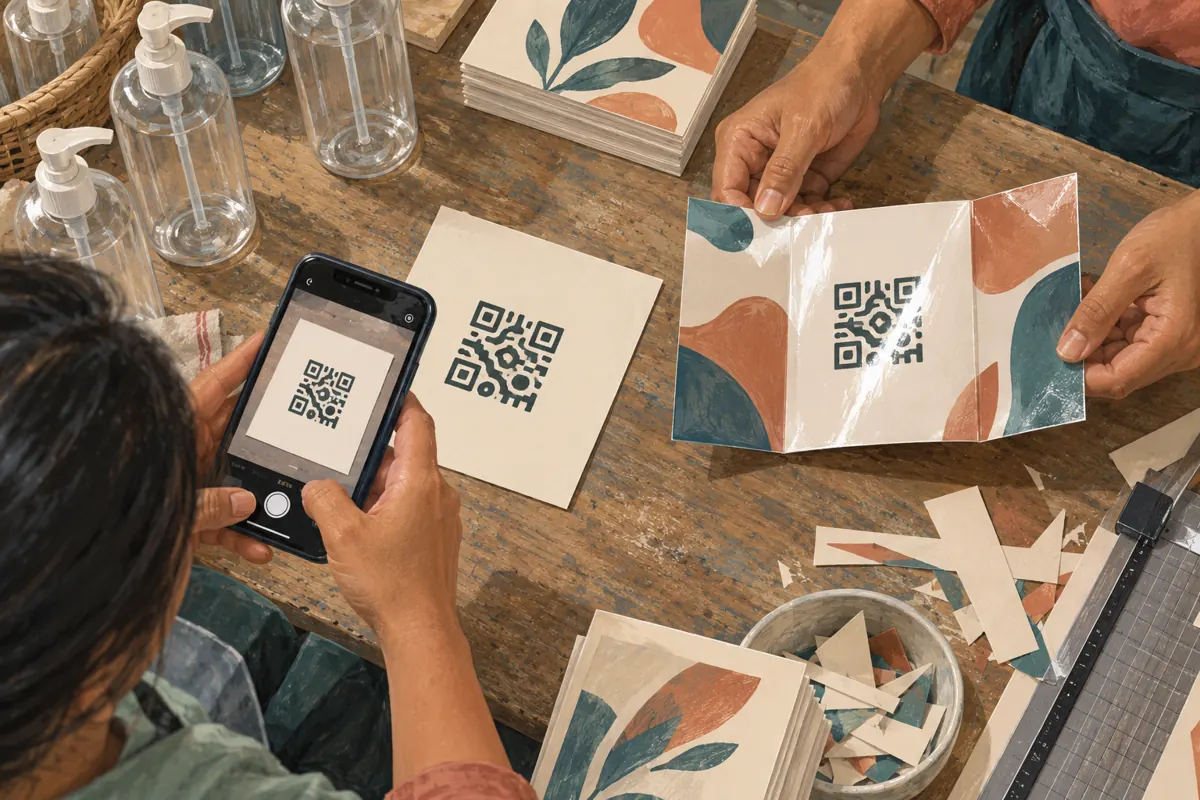
8. Keep SMM-panel services outside the scan test
The supplied jak-follow.com catalogue includes the exact public service name “Telegram Post Views ~ From Real Account”. Its title identifies a post-view offering, but the supplied description is empty. The wording does not independently establish audience identity, Cambodian origin, customer interest or purchasing intent. It also provides no basis for assuming that the service generates QR scans, distributes printed cards, or improves the visitor’s browsing experience.
If a panel service is being considered alongside this campaign, first determine whether it addresses any legitimate, clearly defined requirement and review applicable platform rules. Do not purchase engagement to present the shop as more trusted or popular. Keep any delivery record separate from the card pilot. Purchased engagement is not evidence of genuine interest, sales, advertising delivery or Cambodian users. When the problem is an unreadable code or an unclear product guide, improve that problem directly; a change in a post counter cannot demonstrate that it has been solved.
9. Measure the outcome you can actually observe
Separate print usability, destination activity, product enquiries and confirmed orders. A successful scan test establishes that the tested card worked under those conditions. An enquiry establishes that someone asked a question. An order requires the shop’s normal confirmation process. Do not merge these observations into a single success figure or assume that every new subscriber came from the counter.
Telegram says channel view totals are approximate and include views of forwarded copies. Consequently, a post’s counter cannot serve as a count of unique card scanners. [Telegram’s explanation of view counters](https://telegram.org/faq_channels#q-what-does-the-eye-icon-mean). For a simple pilot, staff can ask willing enquirers how they found the shop and record the answer without collecting unnecessary personal details. Mark uncertain origins as unknown. In the hypothetical shop, a customer mentioning the bag insert supports that individual attribution; it does not prove that all enquiries during the same week came from printed cards.
10. Diagnose the problem before changing the promotion
Different failures call for different fixes. If the phone cannot recognise the code, revisit printing, contrast, size and placement. If it opens the wrong destination, correct the asset and withdraw affected copies. If visitors arrive but cannot distinguish products, improve the guide. If enquiries repeatedly ask about unavailable combinations, clarify sample status and component compatibility. Make one meaningful correction at a time so staff can tell whether it helped.
Common mistakes include approving only the screen version, distributing several competing codes without labels, and treating a larger channel counter as proof that the cards worked. Another is changing the destination while old stock of printed inserts remains in circulation. Finish the pilot with a concrete decision: retain the tested design, revise a specific weakness, or stop distributing a card whose purpose is no longer useful. Keep the approved proof and a short explanation of the decision for the next person responsible.
Frequently asked questions
Should a bottle shop print separate codes for browsing and quotations?
Only if customers need both routes and the layout makes the difference obvious. Start with one task per card where possible. Two unlabelled codes force people to guess. If both are necessary, give each a clear purpose and test whether an unfamiliar visitor chooses the intended destination without help.
Does scanning the card mean the customer subscribed?
Do not treat it that way. Record only the action you actually observed or can substantiate. Opening a destination, subscribing, asking about a pump and confirming an order are distinct events. A staff member watching a successful scan should record a usability observation rather than assume later actions occurred.
Can the shop measure scans from Telegram post views?
No reliable scan total follows from that counter. Telegram documents approximate views and inclusion of forwarded copies. Posts may also receive attention through other routes. For a modest pilot, combine observed print tests with voluntary source answers from enquirers, while acknowledging that this produces incomplete attribution rather than comprehensive tracking.
What if the printed card works but customers still ask basic questions?
Review the questions before redesigning the card. Repeated confusion about bottle capacity, pump inclusion or sample availability suggests a content problem. Add the missing explanation beside the relevant photograph and ask another unfamiliar reader to find it. Questions about individual compatibility may still require a staff response.
Should the shop order post views before distributing its cards?
Post-view delivery does not validate a QR journey or establish buyer demand. First make the information useful and the printed route dependable. Catalogue language alone cannot verify audience quality or location. Any separate service decision should have a defensible purpose and must not be reported as evidence that physical customers scanned, enquired or bought.
Explore the current service catalogue, create an account, or ask a specific question through support tickets.
- Telegram: Reactions, Spoilers, Translation and QR Codes
- Telegram Channels FAQ
- Telegram Channels FAQ: What does the eye icon mean?
Prepared with AI assistance. Illustrations explain the workflow and do not represent customer results.